

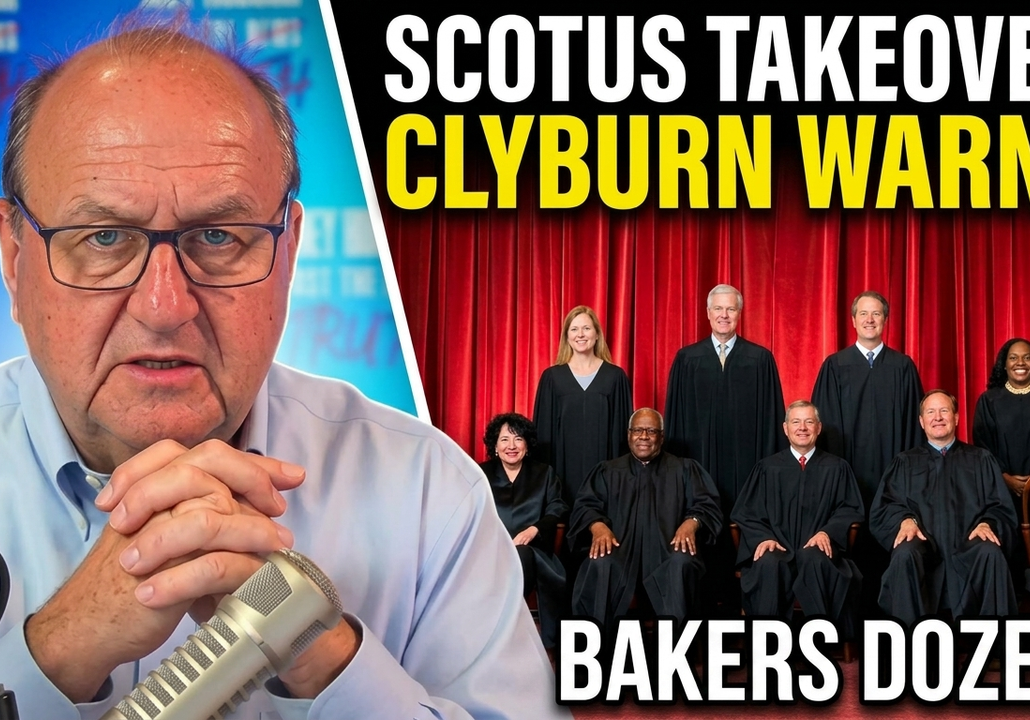
James Clyburn Wants 13 Supreme Court Justices — But Where Would It End?
South Carolina Congressman James Clyburn is calling for a major change to one of America’s most important institutions: expanding the U.S. Supreme Court from nine justices to 13.
Appearing on NBC’s Meet the Press, Clyburn was asked whether he agreed with calls to expand the Supreme Court. His answer was clear.
“Yes, I do,” Clyburn said, adding that “13 is a pretty good number.”
He even described 13 justices as a “baker’s dozen.”
That may make for a memorable sound bite, but the James Clyburn Supreme Court expansion proposal raises a much more serious question.
If Democrats expand the Supreme Court to 13 because they object to its current conservative majority, what happens when Republicans regain control of Congress and the White House?
Do they make it 15?
And when Democrats return to power, does it become 17?
That’s the real issue Americans should be talking about.
Why Does James Clyburn Want to Expand the Supreme Court?
Clyburn argues that the current Supreme Court has moved the country in a dangerous direction.
During his interview, the longtime South Carolina Democrat invoked Chief Justice Roger Taney and the infamous 1857 Dred Scott decision, one of the darkest chapters in Supreme Court history.
Clyburn also directed some of his strongest criticism toward Justice Clarence Thomas.
That’s particularly interesting because Clyburn supported Thomas during his 1991 confirmation battle, before Clyburn entered Congress, and once described Thomas as a good friend.
Today, his opinion is dramatically different.
Clyburn said he had hoped Thomas would follow what he called the “modern underpinnings” of the Constitution. He also said he no longer stands behind the case he once made for Thomas.
Whatever you think of Clarence Thomas, however, criticizing a Supreme Court justice and adding four seats to the Supreme Court are two very different things.
Can Congress Expand the Supreme Court?
Yes.
The Constitution does not specify that the Supreme Court must have nine justices. Congress has changed the size of the Court at different points in American history.
The number has remained at nine since 1869.
That means the most important question surrounding Supreme Court expansion isn’t necessarily whether Congress can do it.
It’s whether Congress should do it for political or ideological reasons.
If a political party can add seats whenever it believes the Court has moved too far in the opposite direction, the long-term consequences could extend well beyond today’s political fight.
Clyburn Isn’t Alone in Supporting Supreme Court Expansion
Clyburn isn’t the first prominent Democrat to support changing the size of the Supreme Court.
Democratic lawmakers including Sens. Elizabeth Warren and Ed Markey have supported expanding the Court, and legislation has previously been introduced in Congress to increase the number of justices.
Supporters of Supreme Court reform argue that Republicans themselves dramatically altered the direction of the Court through the confirmation process.
They frequently point to the Republican-controlled Senate’s refusal to consider President Barack Obama’s nomination of Merrick Garland in 2016, followed by the confirmation of Amy Coney Barrett shortly before the 2020 presidential election.
From their perspective, Republicans played political hardball and produced the current 6-3 conservative majority.
That’s an argument worth acknowledging.
But expanding the Court creates another problem entirely.
What Happens When Republicans Get Their Turn?
This is where the argument for Supreme Court expansion becomes dangerous.
Suppose Democrats control the presidency and Congress and increase the Court from nine justices to 13.
They fill those four new seats.
Eventually, Republicans regain power.
What prevents them from passing legislation expanding the Court from 13 to 15 — or 17?
Nothing.
And that’s the precedent Americans should consider before deciding whether court expansion is a good idea.
The test shouldn’t simply be whether you like the justices who would be appointed today.
Ask yourself whether you would support the same power being exercised by the political party you oppose.
If the answer changes depending upon which party controls Washington, that’s a warning sign.
FDR Tried His Own Supreme Court Expansion
This debate isn’t new.
President Franklin D. Roosevelt famously proposed changing the Supreme Court in 1937 after the Court struck down portions of his New Deal agenda.
Roosevelt was an enormously powerful president, and Democrats enjoyed overwhelming congressional majorities.
Yet his proposal faced substantial opposition — including resistance from members of his own party.
The controversy surrounding Roosevelt’s plan remains relevant because it illustrates the institutional danger involved when a president or political party considers changing the Court while simultaneously battling that Court over its decisions.
Nearly 90 years later, we’re having a remarkably similar conversation.
Supreme Court Reform or Court Packing?
Supporters call proposals like these Supreme Court reform.
Critics call them court packing.
Whatever terminology you prefer, the underlying question remains the same:
Should politicians be able to change the number of Supreme Court justices when they don’t like the ideological makeup of the Court?
And this isn’t a question only Democrats should answer.
Republicans should face exactly the same standard.
Conservatives might strongly oppose expanding the Court today. But would they maintain that position if a future Supreme Court had a 6-3 liberal majority?
Principles matter most when they prevent your own side from doing something politically advantageous.
The Supreme Court Is Bigger Than One Election
James Clyburn says 13 is a “pretty good number.”
Maybe that’s true mathematically.
But there’s nothing magical about 13.
Once America establishes the precedent that Congress can expand the Supreme Court because the governing party believes the Court has become too ideological, there’s little preventing future congressional majorities from doing it again.
Today it’s 13.
Tomorrow it could be 15.
Then 17.
At some point, the Supreme Court risks becoming another political institution whose composition changes whenever control of Washington changes hands.
That’s why this debate is about much more than James Clyburn or Clarence Thomas.
It’s about whether Americans want to fundamentally change the rules governing one of our three branches of government.
And before either political party opens that door, we’d better be certain we’re comfortable with the other party walking through it.
WATCH: My Full Take on Clyburn’s Supreme Court Proposal
In my latest commentary, I break down Congressman James Clyburn’s proposal, his remarkable comments about Clarence Thomas and the precedent that could be created by expanding the Supreme Court.
Watch the full video and then join the conversation: Should the Supreme Court remain at nine justices, or is it time for Congress to expand it?
Leave your thoughts in the comments, share this story with your friends, and subscribe for more straightforward coverage of the political stories affecting South Carolina and the nation.



Leave a Reply
Want to join the discussion?Feel free to contribute!